Vintage Charm: The Bubble Font That Brings Retro Playfulness to Modern Design
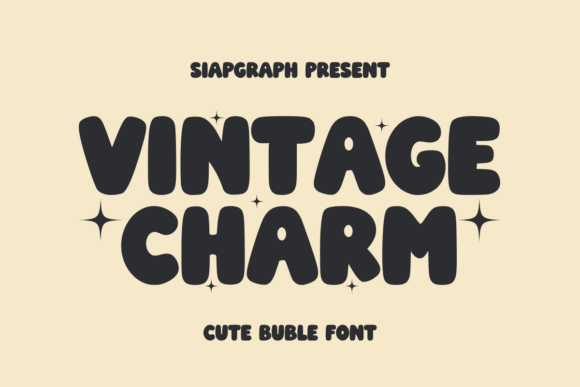
There's something undeniably magnetic about a typeface that makes you smile before you've even read the words. That's the effect Vintage Charm delivers—a bubble font with bold, rounded shapes that channels the carefree spirit of retro design while remaining thoroughly usable in contemporary projects. Whether you're designing a logo for a neighborhood bakery, crafting Instagram graphics for a lifestyle brand, or putting together packaging for a handmade candle line, this typeface brings a warmth and personality that flatter, more restrained fonts simply can't match.
Why This Typeface Feels Instantly Familiar
Great design often taps into shared visual memories. The curves and generous letterforms in Vintage Charm recall mid-century signage, classic toy packaging, and the playful typography that once adorned soda shop menus and amusement park posters. That nostalgic pull isn't accidental—rounded, inflated letter shapes trigger associations with friendliness, approachability, and fun. Psychologists who study visual perception have noted that soft, curved forms feel safer and more inviting than sharp, angular ones. When your audience encounters this display font on a product label or a social media post, those subconscious feelings start working in your favor before a single word is consciously processed.
What separates a novelty throwback from a genuinely useful design asset is versatility. Vintage Charm manages to feel retro without being locked into a single era or aesthetic. Pair it with muted earth tones and hand-drawn illustrations, and it suits a rustic farmhouse brand. Combine it with bright pastels and geometric patterns, and it fits right into a modern kawaii-inspired packaging concept. That flexibility is what makes it more than a one-trick novelty—it's a creative font that adapts to the designer's vision rather than dictating it.
Putting Vintage Charm to Work Across Real Projects
Understanding where a typeface shines helps you get the most out of your investment. Here are some of the most effective applications for a bubble font like this one, along with practical observations from designers and brand owners who favor this style.
Brand Identity and Logo Design
A logo sets the tone for everything a business communicates. For brands that want to project warmth, playfulness, or a handmade quality—think children's clothing lines, craft breweries, ice cream parlors, or independent bookstores—Vintage Charm offers an immediate visual shorthand. The bold weight ensures legibility even at small sizes, which matters when a logo appears on a favicon, a social media profile picture, or a stitched label inside a garment. Because the letterforms are so distinctive, a wordmark set in this typeface can become recognizable on its own, reinforcing brand recognition over time.
Packaging Design That Stands Out on the Shelf
Walk down any grocery aisle and you'll notice that the products catching your eye are rarely the ones using the same Helvetica and Garamond combinations as everything else. Packaging design thrives on differentiation. A bubble display font on a jam jar label, a granola box, or a bath bomb sleeve immediately signals personality. It tells the shopper, "This product has character." For small businesses competing against larger brands with bigger budgets, typography choice is one of the most cost-effective ways to create shelf presence.
Social Media Graphics and Digital Content
Content creators and social media managers know the drill: you have roughly one second to stop someone from scrolling. Bold, cheerful typography does that job well. Vintage Charm works beautifully for Instagram story headers, Pinterest pin titles, YouTube thumbnail text, and TikTok overlays. Its rounded shapes render cleanly on screens of all sizes, and the high visual weight ensures text remains readable even on mobile devices held at arm's length. When paired with a clean sans serif font for body copy, it creates a hierarchy that guides the viewer's eye exactly where you want it.
Posters, Invitations, and Print Materials
Event posters, wedding invitations, birthday party stationery, and local business flyers all benefit from typography that feels celebratory. The retro playfulness of this typeface lends itself naturally to occasions and announcements. A neighborhood farmers' market poster, a charity fun-run registration page, or a holiday sale window sign—each of these contexts calls for type that feels inviting rather than corporate. Vintage Charm answers that call without sacrificing readability, which is a balance many decorative fonts fail to strike.
Merchandise and Physical Products
Tote bags, enamel pins, sticker sheets, t-shirts, mugs—the merchandise market rewards designs that people want to be seen wearing or displaying. Typography plays a huge role in whether a design feels like something worth purchasing. A witty phrase set in a bubble font on a tote bag reads as fun and approachable. The same phrase in a stiff serif might feel ironic or detached. For entrepreneurs selling on platforms like Etsy or at craft fairs, the right typeface choice can directly influence whether a browser becomes a buyer.
Practical Tips for Getting the Most From Your Font Choice
Choosing a typeface is only the first step. How you use it determines whether your design succeeds or falls flat. Here are some grounded recommendations for working with display fonts like Vintage Charm in professional and personal projects.
Test your pairings before committing. A bold bubble font rarely works well as the only typeface in a design. You'll almost always need a secondary font for longer text—product descriptions, body paragraphs, captions, and fine print. Classic sans serif fonts like Open Sans, Lato, or Montserrat tend to complement rounded display type without competing for attention. Try several combinations and view them at the actual size they'll appear in your final design, not just zoomed in on a large monitor.
Watch your spacing. Rounded, inflated letterforms can feel cramped if the tracking is too tight. Give the letters room to breathe, especially at larger sizes where every curve and counter is visible. Most design software lets you adjust letter spacing easily—use that control. A few extra pixels of space between characters can transform text from cluttered to polished.
Consider the full character set. Before purchasing any premium font, review the complete glyph map. Does it include the punctuation and special characters your project needs? Does it offer multiple weights or styles—bold, light, italic, outline? A versatile typeface with a robust character set saves you from having to find workarounds mid-project. Many quality font packages include alternates and ligatures that add even more design flexibility.
Think about licensing early. If you're using a font for commercial purposes—selling products, creating client work, distributing printed materials—make sure the license covers that use. Most reputable font marketplaces are transparent about what's included, but it's worth confirming before you build an entire brand identity around a typeface you can't legally use in the way you intended. This is especially important for designers working with multiple clients, where desktop and web font licenses may need to be purchased separately.
Match the font's energy to your message. Not every project calls for exuberance. A bubble display font is a poor fit for a law firm's annual report or a medical clinic's patient intake form. But for a children's party supply company, a vintage-inspired clothing brand, a food truck, or a creative agency that wants to signal approachability, it's exactly right. The best typography decisions start with an honest assessment of what you're trying to communicate and who you're trying to reach.
Building a Cohesive Visual Language
One of the most overlooked benefits of selecting a distinctive typeface early in a project is the consistency it creates across every touchpoint. When your website headers, your Instagram graphics, your printed flyers, and your product packaging all share the same typographic DNA, your audience starts to recognize you before they even read your name. That's the foundation of strong brand identity—it's not just a logo, it's a system of visual cues that work together.
Vintage Charm, used thoughtfully as part of a broader design system, becomes one of those cues. It anchors your visual communication in a specific emotional register—cheerful, nostalgic, approachable—while leaving plenty of room for color, imagery, and layout to do their own work. The font doesn't need to appear on every single piece of collateral to be effective. Sometimes it shows up only on headlines or call-to-action buttons, with more neutral typography handling the rest. That selective deployment actually strengthens its impact.
For designers and creative entrepreneurs building a library of reliable design assets, investing in a well-crafted display font is one of the highest-leverage decisions you can make. It pays dividends across dozens of projects, saving time on font-hunting for each new brief and ensuring a level of visual quality that free alternatives rarely match. The difference between a project that looks homemade and one that looks professionally designed often comes down to details like this—thoughtful typography choices applied with intention and consistency.