Quinn: The Bone-Chilling Typeface for Bold Creators
Some design projects demand more than just a font; they demand a presence, a texture, a story etched into every letterform. If you're crafting a world of dark fantasy, gothic elegance, or unapologetic horror, a standard typeface simply won't cut it. You need a character set that feels excavated from the earth itself, something with history, weight, and a touch of the macabre. This is where Quinn enters the frame—not as a simple collection of letters, but as an anatomical toolkit for visual storytelling.
An Anatomy of Atmosphere
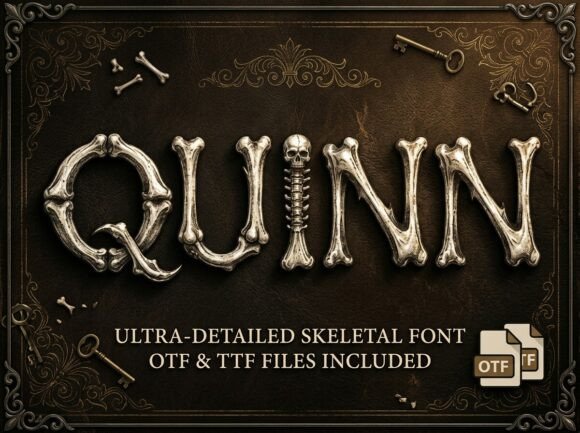
Quinn is an ultra-detailed display typeface built from a foundation of real-world skeletal references. Its design philosophy moves beyond simple stylization. Each letter is meticulously crafted from weathered bones, vertebrae, and jagged joints, creating a silhouette that is instantly recognizable and deeply evocative. The "aged-calcium" texture applied to its surface isn't a flat effect; it suggests centuries of existence, adding a layer of tactile realism that draws the viewer in. This isn't a font that whispers; it speaks in a low, resonant tone perfect for projects that need to command attention immediately.
As a premium font, its value lies in this specificity. While a serif font offers tradition and a sans serif font provides clean modernity, Quinn operates in a different realm. It's a creative font designed to fulfill a very particular aesthetic need: the dark-fantasy and horror niche. Understanding this core personality is the first step to using it effectively.
Forging a Haunting Brand Identity
For entrepreneurs and designers in specific industries, building a memorable brand identity means embracing a cohesive mood. Quinn isn't for a bakery or a tech startup, but for a heavy metal band, an independent horror publisher, a haunted attraction, or a gothic jewelry artisan, it becomes the cornerstone of a powerful visual language.
Consider its applications:
- Logo Design & Wordmarks: A logotype set in Quinn instantly communicates genre and tone. Pair it with a simple, clean sans serif font for body text to ensure readability while letting the logo do the heavy lifting in setting the atmosphere.
- Packaging Design: For a craft brewery with a dark mythology-themed stout line or a candle company specializing in eerie scents, Quinn on the label transforms a product into an artifact. It suggests a story before the customer even takes a sip or lights the wick.
- Editorial & Book Design: Imagine a chapter title in a fantasy novel or the cover of a macabre poetry collection. Quinn provides that cinematic, title-card impact perfect for editorial design where a strong visual hook is required.
Digital Shadows: Social Media & Web Impact
In the scroll-stopping world of digital content, a display font like Quinn is a secret weapon for social media graphics. Its high-impact silhouette ensures that a title or key message is legible even at small sizes on a busy feed. Use it for:
- Cinematic "memento-mori" style headers for YouTube channels or podcast cover art.
- Event posters for Halloween parties, film screenings, or themed markets shared on Instagram and Facebook.
- Thumbnail text for video content in the horror, true crime, or dark fantasy genres, where the typography itself is a clickability signal.
- Branded merchandise mockups, from T-shirts to enamel pins, showcasing the font's versatility in merchandise applications.
On a website, Quinn should be used strategically. It's not for body copy or lengthy blog posts. Instead, deploy it for major headings, hero section titles, or call-to-action buttons where its unique character can shine without compromising readability. Its role on the web is to establish mood and guide the eye, working in tandem with more legible fonts for paragraphs.
Practical Wisdom for Pairing and Use
Introducing a font with such a strong personality into a project requires thoughtful consideration. Here’s how to harness its power without overwhelming your design:
- Master the Pairing: Quinn demands a quiet partner. Match it with highly legible, neutral typefaces. A classic serif font like Garamond can add a touch of gothic elegance for subheadings, while a geometric sans serif font like Montserrat or Lato will provide stark, clean contrast for body text. Avoid pairing it with other decorative or script fonts.
- Context is King: Always test the font in the context of your final medium. The impact of its bone-like details might need slight size or spacing adjustments for a small web design header versus a large poster. Review the full character set—does it include the punctuation and symbols your project requires?
- Readability First: The primary goal is communication. Use Quinn for short, impactful bursts of text: titles, headers, slogans. For any text that needs to be read for more than a few seconds, revert to a standard, highly readable typeface. This balance is crucial for professional presentation.
- Licensing Clarity: If you're using Quinn for commercial projects—whether for a client, your own business, or merchandise—ensure you understand the licensing terms. A commercial font license typically covers a specific scope of use, so review it carefully to avoid future issues.
Beyond the Bones: A Tool for Specific Visions
Ultimately, Quinn is a specialized instrument in the vast orchestra of modern typography. It’s not a font you'll use every day, but when the project calls for it, nothing else will suffice. It solves a specific design problem: how to visually articulate themes of mortality, fantasy, decay, and dark elegance with authenticity and artistic integrity.
For the creative entrepreneur, the indie game developer, the content creator exploring niche genres, or the designer building a portfolio of unique work, having Quinn in your toolkit means being prepared for those projects that require a truly bone-chilling realism. It’s a testament to how the right typeface doesn’t just display words—it embodies an entire world.