The Sweet, Handwritten Charm of Strawberry Milk Candy Typography
There's a specific kind of visual warmth that recalls summer afternoons and childhood treats. It’s a feeling of playfulness, nostalgia, and unadulterated sweetness. Capturing that feeling in a design project requires more than just a color palette; it needs a typographic voice that speaks the same language. This is where a unique font duo like Strawberry Milk Candy steps in, offering a blend of whimsy and elegance that can transform a simple layout into something memorable and inviting. It’s not just a set of letters; it’s a toolkit for creating a mood.
A Font Duo with a Distinct Personality
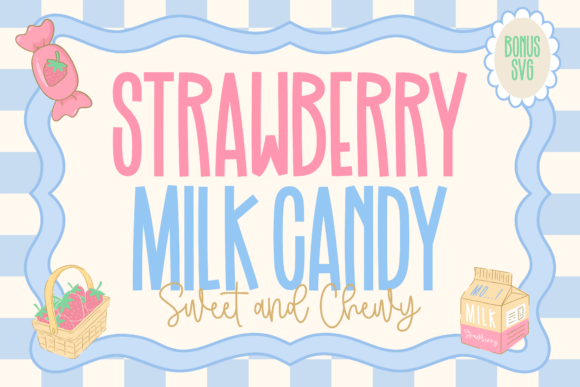
At its heart, this typeface pairing is a study in complementary contrasts. The primary component is a tall, hand-drawn sans serif. Its letterforms are slim and slightly irregular, avoiding the sterility of geometric fonts. There’s a gentle, human imperfection to the strokes that feels approachable and youthful. Think of the careful lettering on a birthday card or the playful title on a vintage candy wrapper. It’s clean enough for legibility but crafted with enough personality to stand out from the crowd.
The true magic happens when you introduce the accompanying script. This isn’t a formal calligraphy or a stiff cursive. It’s a smooth, flowing handwritten font that mimics the creamy, swirling motion of strawberry milk being stirred. The connections between letters are soft and fluid, adding a layer of sophistication and sweetness to the sturdy sans serif. Used together, they create a dynamic visual conversation—the grounded, friendly base font and the expressive, flowing accent. This combination is a powerful tool for any designer or entrepreneur looking to build a brand identity that feels both authentic and charming.
Practical Applications for Creative Projects
The versatility of a well-designed font duo is what makes it a valuable asset. Strawberry Milk Candy isn’t limited to one niche; its personality can adapt to a wide array of creative and commercial applications. For small business owners and product designers, it’s a natural fit for packaging design, especially for artisanal foods, children’s products, bath and body goods, or any brand aiming for a homemade, premium feel. Imagine the script font used for a product name like "Organic Berry Jam" on a label, with the sans serif used for the descriptive text. The effect is immediate: trustworthy, delightful, and highly marketable.
In the digital realm, the font shines in social media graphics and website headers. A Instagram post announcing a "Summer Sale" or a "New Collection" using the whimsical sans serif can instantly grab attention with its cheerful energy. The script font is perfect for quotes, testimonials, or call-to-action phrases, adding a personal, handwritten touch that feels more intimate than standard web fonts. For bloggers and content creators, it can bring life to recipe cards, printable planners, or digital stationery, creating a cohesive and branded look across all touchpoints.
For those in event planning or marketing, the applications are just as rich. Wedding invitations, baby shower announcements, or Valentine’s Day cards benefit enormously from its sweet, romantic aesthetic. The sans serif ensures all the essential details are readable, while the script adds that special, celebratory flair. Even in editorial design, like a magazine layout for a lifestyle or food section, these fonts can be used to create captivating pull quotes and section headers that draw the reader’s eye and break up dense blocks of text.
Building a Cohesive and Engaging Brand
Choosing typography is a strategic decision, not just an aesthetic one. The fonts you select become a core part of your brand’s voice. A playful, handwritten style like Strawberry Milk Candy communicates specific values: creativity, care, approachability, and a touch of nostalgia. For a bakery, a toy store, or a children’s clothing line, this alignment is perfect. It tells your audience exactly what kind of experience to expect before they even read a word.
Consistency is key to brand recognition. By using the same font duo across your logo, website, social media, packaging, and print materials, you create a seamless visual identity. Customers will start to associate that friendly, sweet typographic style with your business, building familiarity and trust. However, readability must always be considered. While the script font is beautiful for headlines and short phrases, it’s not designed for long paragraphs. Its strength is in accentuation. Use the clean, legible sans serif for body copy, product descriptions, and any text where clarity is paramount. This thoughtful pairing ensures your message is both seen and understood.
Making the Most of Your Typography Toolkit
When you acquire a premium font like this, you’re often getting more than just the basic letters. Take the time to review all the included files. Many professional font packages include alternate characters, ligatures, and stylistic sets. These are variations of specific letters that can add even more flair and uniqueness to your text. For instance, the script font might include multiple versions of a lowercase ‘s’ or ‘t’ that can be swapped to avoid repetition and create a more authentic handwritten flow.
Before finalizing any design, always test your font pairings in context. How does it look on a dark background versus a light one? Does it maintain its charm when scaled down for a business card or blown up for a poster? Print a sample if possible. Another crucial step is to understand the licensing. If you’re using the font for client work, merchandise for sale, or digital products you distribute, you need to ensure you have the appropriate commercial license. This protects both you and the font designer and is a standard part of professional practice.
Ultimately, a typeface like Strawberry Milk Candy is more than a decorative element. It’s a design asset that helps tell a story. It bridges the gap between professionalism and personality, offering a way to connect with an audience on an emotional level. In a crowded marketplace, that connection—forged through thoughtful, consistent, and charming visual communication—can make all the difference. It’s a tool for building not just designs, but experiences that feel just a little bit sweeter.