Airborne Street: The Font That Brings Bold, Urban Energy to Your Designs
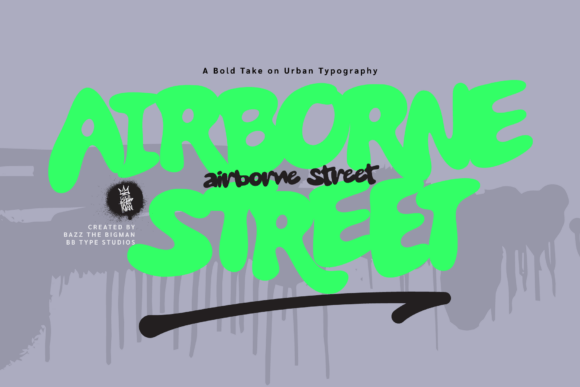
There's a particular kind of visual punch that stops you mid-scroll—the design that doesn't just ask for attention but commands it. That's the energy you get with Airborne Street, a bubble graffiti typeface built for projects that refuse to blend into the background. It takes the rounded, approachable softness of bubble lettering and injects it with an unmistakable street-level confidence, creating something that feels both playful and unapologetically bold. If you've been searching for a typeface that can carry the weight of a brand identity or the excitement of a marketing campaign without losing its personality, this might be the creative asset worth exploring.
What Makes This Typeface Stand Out in a Crowded Market
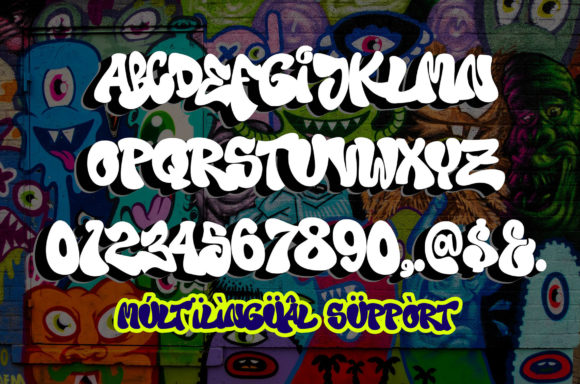
Most display fonts fall into predictable camps. Some are elegant but distant. Others are loud but lack refinement. Airborne Street occupies a different space entirely. The letterforms carry a rounded, inflated quality—think the kind of graffiti you'd spot on a warehouse wall in Brooklyn or a skate park in Los Angeles—but the execution feels polished. Each character has been carefully crafted so the curves feel intentional, the spacing works across different sizes, and the overall rhythm of a word or phrase maintains its visual cohesion.
What separates this from generic bubble fonts is the attitude baked into every stroke. There's a swagger in the way the letters sit together, a sense of movement that suggests the typeface itself is alive. That quality makes it particularly effective for projects where you need typography to do more than just convey information—you need it to communicate a feeling, a vibe, an entire aesthetic in a single glance.
For designers working in modern typography, this kind of personality-driven font is invaluable. It solves a real problem: how do you make something look energetic and youthful without it reading as amateur or juvenile? Airborne Street threads that needle by maintaining professional-grade letter construction while delivering visual impact that feels spontaneous and authentic.
Real-World Applications That Actually Work
Let's talk specifics, because the best creative font in the world is useless if you can't figure out where to deploy it. Here's where Airborne Street genuinely shines.
Streetwear branding and logo design is the obvious starting point. If you're building a clothing label, a sneaker brand, or any lifestyle company that targets a younger, style-conscious audience, this typeface practically writes the brand identity for you. Use it for your primary wordmark, your hang tags, your website headers. The rounded shapes feel approachable while the overall aesthetic signals that your brand understands urban culture. Pair it with a clean sans serif font for body copy and you've got a visual system that works across every touchpoint.
Packaging design is another arena where this font excels. Think about products on a shelf—cereal boxes, energy drinks, snack packaging, cosmetics targeting a younger demographic. The bubble letterforms have an inherent fun factor that makes products feel inviting and exciting. When someone's scanning a crowded retail shelf, Airborne Street gives your packaging the kind of visual magnetism that earns those crucial first few seconds of attention.
Social media graphics represent perhaps the most practical everyday application. Instagram stories, TikTok thumbnails, YouTube channel art, promotional posts for events or sales—these formats demand typography that reads quickly and feels native to the platform's energy. A display font like Airborne Street was essentially designed for this environment. It's bold enough to work at small sizes on a phone screen, distinctive enough to become part of your recognizable visual brand, and versatile enough to work across different content types.
Don't overlook poster design and event promotion, either. Music festivals, club nights, street art exhibitions, pop-up shops, product launches—anywhere you need to generate excitement and communicate that something is happening, this typeface delivers. The graffiti influence gives it an inherent association with music, art, and street culture that feels genuine rather than forced.
For editorial design and blog headers, Airborne Street works beautifully as an accent typeface. Use it for pull quotes, section headers, or feature article titles in publications covering music, fashion, urban culture, or youth-oriented topics. It breaks up the monotony of body text and gives your layouts visual texture and personality.
Merchandise is another natural fit. T-shirts, hoodies, hats, stickers, tote bags—any physical product where the typography IS the design benefits from a font with this much built-in character. The letterforms are strong enough to stand alone as graphic elements without needing additional illustration or decoration.
Making It Work: Practical Typography Advice
Having a bold typeface is one thing. Using it effectively is another. Here are some grounded recommendations for getting the most out of Airborne Street in your projects.
Test your font pairings carefully. A display font with this much personality needs a quieter partner. Pair it with a straightforward sans serif font like a geometric or humanist typeface for body text. Avoid pairing it with other expressive fonts—script fonts, other handwritten fonts, or ornate serif fonts—unless you have a very specific aesthetic goal. The contrast between Airborne Street's energy and a clean companion font creates visual hierarchy and keeps your designs from feeling chaotic.
Consider readability in context. This is a display font, which means it's optimized for headlines, logos, and short-form text—not for paragraphs. Use it at sizes where the letterforms can breathe and the rounded shapes remain distinct. For smaller applications like captions or fine print, switch to your secondary typeface. Understanding this distinction is fundamental to professional typography and will make every project stronger.
Review the included font styles. Quality premium fonts typically ship with multiple weights, alternates, or stylistic variations. Before you start designing, open the font file and explore what's available. You might find alternate characters, ligatures, or stylistic sets that give you more creative flexibility. Understanding your full toolkit before you begin saves time and often sparks ideas you wouldn't have discovered otherwise.
Match the font to your project's emotional goals. Airborne Street communicates energy, youth, creativity, and urban authenticity. If your project calls for sophistication, minimalism, or traditional authority, this probably isn't the right choice—and that's fine. The best design assets are the ones that align with what you're actually trying to communicate, not the ones that look coolest in isolation. Be honest about whether the font's personality matches your brand or project's personality.
Think about commercial licensing. If you're using this font for a business—whether that's a client project, your own brand, merchandise for sale, or marketing materials—make sure you understand the licensing terms. A properly licensed commercial font protects you legally and ensures the designer who created it is fairly compensated. This is especially important for logo design, where the font becomes part of a trademark, and for packaging design and merchandise where it appears on products generating revenue.
Building Brand Recognition Through Typography
One of the most overlooked aspects of brand identity is typographic consistency. When you commit to a specific typeface and use it consistently across your website, social media, packaging, print materials, and marketing assets, you create a visual anchor that audiences learn to recognize. Think about how immediately you identify certain brands just by their letterforms—that's the power of consistent typographic branding.
Airborne Street offers a particularly strong opportunity here because its visual personality is so distinctive. A brand that uses this typeface consistently across platforms will develop recognition quickly. Your Instagram grid becomes cohesive. Your product packaging feels unified with your website. Your event posters connect visually to your social media presence. This kind of visual consistency builds trust and professionalism, even when the aesthetic itself is deliberately raw and energetic.
For small business owners and entrepreneurs—particularly those in fashion, music, food and beverage, entertainment, or lifestyle spaces—this font represents an accessible entry point to strong visual branding. You don't need a massive budget to create a brand that looks intentional and culturally relevant. You need smart typographic choices, and Airborne Street makes one half of that equation straightforward.
The beauty of a well-designed creative font is that it carries so much meaning in such a compact package. Every time you set a headline, design a social post, or mock up a product label, you're making a statement about who you are and who you're speaking to. Airborne Street makes that statement loud, clear, and impossible to mistake for anything other than something bold, fun, and authentically urban. Whether you're a seasoned designer building out a client's brand system or an entrepreneur designing your first set of business cards, it gives you a tool that does real communicative work—and looks good doing it.